Motion and Logic Controllers

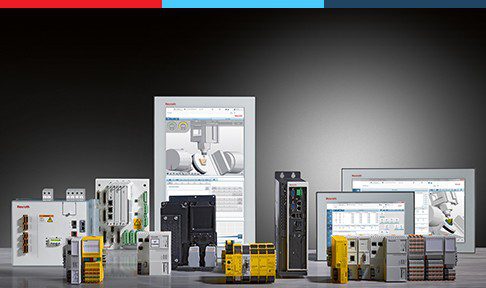
Motion and Logic Controller Offerings from Bosch Rexroth

Figure 1: Motion and Logic Controller Offerings from Bosch Rexroth

Image retrieved from: https://www.boschrexroth.com/en/us/products/product-groups/electric-drives-and-controls/topics/motion-logic-pac/index\

References:

Motion and Logic Controllers Product Selection Guide

As a result of being a widespread and highly implemented technology, motion and logic control systems have a lot to consider when making a product selection. As an aid to making a sound decision, the differences between various controller types are explored below.

Programmable Logic Controller (PLC)

As described on the dedicated PLC page, as well as the product theory page, programmable logic controllers are a basic, go-to solution for many logic control needs. PLCs were designed to be a replacement for all of the electrical relays, switches, and wires used to previously control a system, and be a cost and space efficient alternative. PLCs, by design, are easier to program, troubleshoot, and service by programmers and technicians alike because of their simplicity, however, this leads to limited processing power and overall capacity. In the context of motion control, PLCs are perfect for performing and managing single-axis motion, light calculations, and data handling. An example of this could be a conveyor belt on an assembly line, and the PLC could control the speed and direction of the belt depending on the amount of items on it. Any more complex tasks are better suited for more advanced technology, such as PACs or IPCs. A block diagram of a basic PLC system is shown in the picture below:
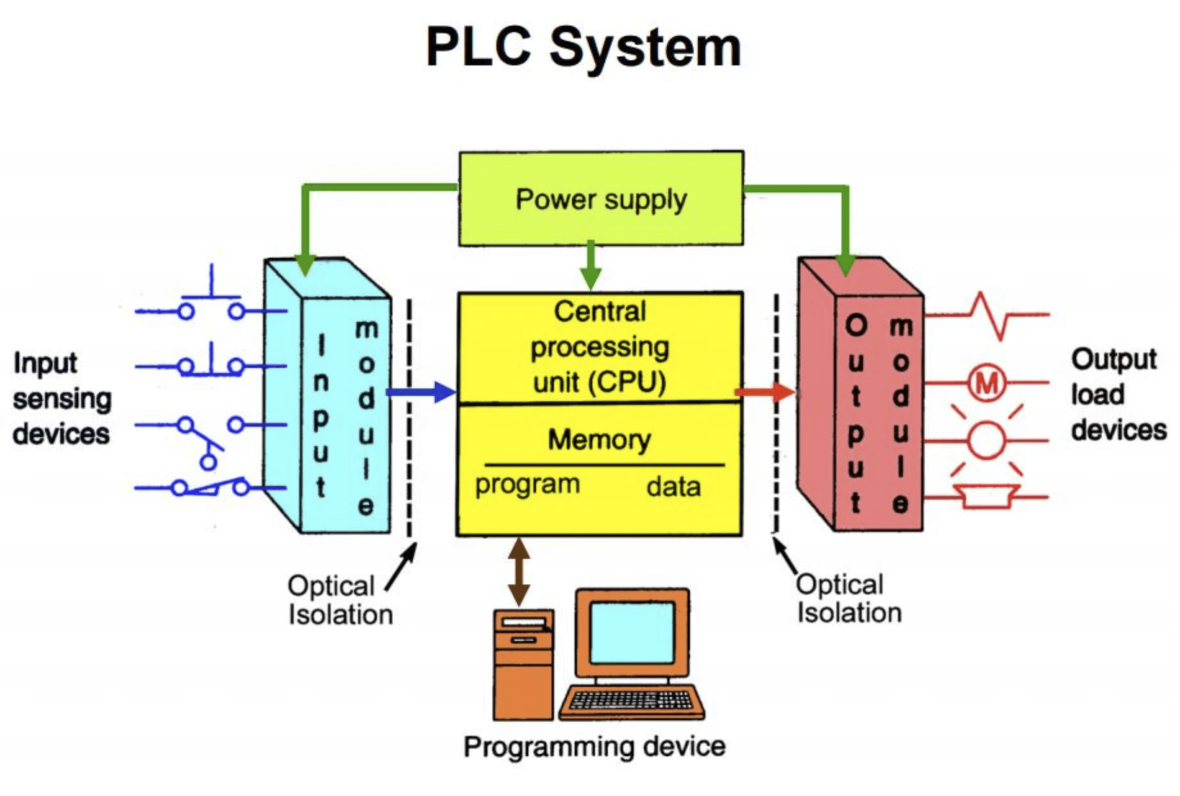
A block diagram of a basic PLC system

Image retrieved from https://www.machinedesign.com/learning-resources/engineering-essentials/article/21834250/engineering-essentials-what-is-a-programmable-logic-controller

Programmable Automation Controllers (PACs)

A programmable automation controller can be thought of as a PLC with the processing power of a personal computer. Some PLCs nowadays are becoming more and more advanced, so the line between PAC and PLC is blurred. However, the two defining characteristics of a PAC that separate it from a PLC are the modularity and open architecture of the PAC. By design, PACs have higher computing, memory, and I/O capabilities, and can more easily interact with other controllers to serve larger applications and systems. PACs can also be programmed the same way as PLCs, or be programmed in a typical computer language such as C++. These advantages make PACs better suited for complex applications that require numerous subsystems be monitored, for example, a factory floor with multiple assembly lines and specialty robots collaborating to produce parts. One example of a PAC is shown in the picture below:
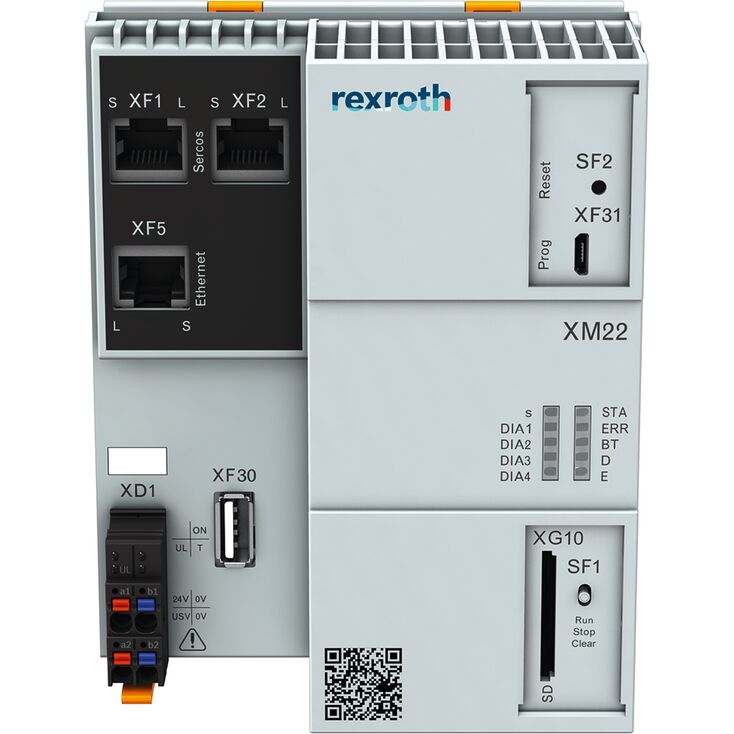
Programmable Automation Controllers (PACs)

Image retrieved from https://www.boschrexroth.com/en/us/products/product-groups/electric-drives-and-controls/motion-control/mlc-xm

This device is a Motion and Logic Controller from the Bosch Rexroth XM series. What sets this device apart from a PLC is its capability to increase the amount of I/O on-board by directly connecting more S20 I/O modules or indirectly connecting more I/O through various fieldbuses.

Industrial PCs (IPCs)

Industrial PCs (IPCs) are exactly what the name suggests: PCs that are specialized for an industrial environment. They are essentially normal computers, running an operating system like Windows, but built with components that are meant to withstand a harsh environment such as a factory floor. However, due to the nature of an operating system such as Windows, sometimes an IPC needs to have a second real-time operating system to help it perform complex tasks such as coordinated motion. IPCs have the largest memory and processing capability between them, PLCs, and PACs. One common application of IPCs is an imaging system where an abundance of data is collected at a rapid rate. IPCs can also be integrated into larger systems where they can take on a supervisory role for an entire operation. One example of an IPC is shown in the picture below:
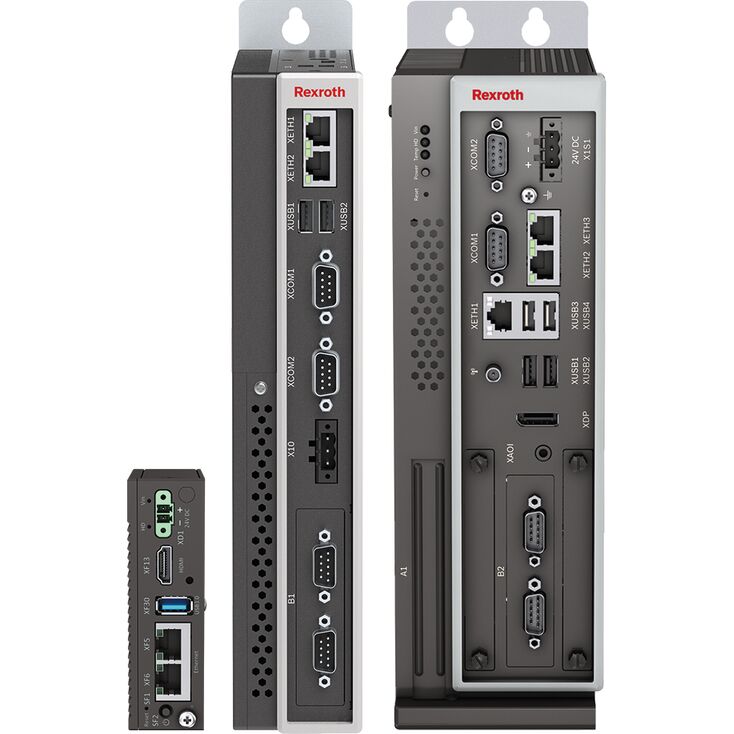
Industrial PCs (IPCs)

Image retrieved from https://www.boschrexroth.com/en/us/products/product-groups/electric-drives-and-controls/industrial-pc-and-operator-panels/box-pc/pr#

The device shown in the picture is a Box PC from the Bosch Rexroth PR series. This Industrial PC in particular is meant to be mounted in a cabinet setting, and comes with multiple operating system options. These devices are highly expandable through their expansion slots and require a display to operate.
Motion and Logic Controllers Product Theory

We must talk about basic logic control in order to understand motion control, as motion control is a subtype of logic control itself.

Logic Control

Logic control was initially implemented as automation in factories and consisted of relays, counters, timers, and other components. Because early logic control had to be wired up on a per-process basis, they could not be easily rewired to complete another task, and often would suffer under more harsh industrial environments. Programmable logic controllers were developed as a solution to these problems, replacing the growing number of parts required and to allow for repurposing and reprogramming later. The first PLC was developed in 1969 by Bedford Associates for General Motors, and was originally named the Modicon (Modular Digital Controller) until the universal term “programmable logic controller” was coined. The programmable logic controller replaced electrical relays with a solid-state programmable device that could perform logic functions in the same way that the relays could, without requiring the physical relays themselves. A PLC could be thought of as a simulation of those same relays. In order for PLC’s to be successfully implemented into any system of interest, the engineers who created the PLC designed it in such a way that the coding language was similar to a ladder logic diagram, which most technicians at the time were familiar with. Ladder logic refers to a specific type of diagram that is used to represent industrial control logic systems. Nowadays, PLCs are programmed using five different programming styles as defined by the international standard IEC 61131-3: Ladder diagram, function block diagram, sequential function chart, instruction list, and structured text. Ladder diagrams are still one of the most popular forms of coding PLCs today. Since the invention of the PLC, logic controllers have evolved to meet more specific needs and processes. Some of these advanced controllers are devices known as programmable automation controllers (PACs), industrial PCs (IPCs), micro-PLCs, and more. Each type of controller is explored in the Product Selection Guide page.

Motion Control

As mentioned above, motion control is an application of logic control. Motion control is the use of a logic controller to control the motion of a motor or actuator. Motion controllers are used in many different engineering applications, such as robotics, automation, assembly, machining. Due to the rather complex nature of some motion control applications, sometimes a PLC alone is not enough to get the job done. PLCs are fine and capable of handling motion in one direction, however, devices such as industrial computers are used for their increased processing power and ability to handle motion in, say, two or three axes.

Components of a Motion Control System

The four main components of a motion control system are the motion controller, the electric drive, the motor, and the feedback device. Depending on the system, and what type of feedback the system requires, there may or may not be a feedback device included.

Motion Controller

The motion controller is the PLC, PAC, or IPC of the system. It is the heart and brain of the system. The motion controller takes information from the system, processes the information, and sends out commands to the other parts to function as designed. Motion controllers are selected with the chosen application in mind, and the complexity of motion, response time, and analog-digital resolution are a few of the things considered when deciding what kind of motion controller to use.

Electric Drive

An electric drive is what connects the motion controller to the motor. The drive takes the signal from the controller and determines what voltage and current needs to be sent to the motor in order for it to function as intended. Different types of electric drives include digital, analog, linear, switching, stepper and servo, each with their own applications.

Motor

The motor is the arm and legs of a motion control system. Motors are what perform the actual motion by converting electrical energy into mechanical energy. All motors are either powered by alternating current (AC) or direct current (DC).

Feedback Device

A feedback device is typically a sensor placed in the circuit to collect information about how the system has performed a function. This could be an encoder on the motor, ultrasonic sensor measuring distance, or a thermocouple measuring a change in temperature on a part. The motion controller receives information from a feedback device and adjusts its performance accordingly. Feedback devices are only included in systems that utilize closed-loop feedback. Open-loop systems do not utilize feedback, and therefore do not require a feedback device. A keen eye might recognize that a motion control system could also be described as something like a servo or stepper motor connected to a controller. A servo motor itself contains a drive, motor, and feedback device, and the only thing separating it from being a full fledged motion control system would be the addition of a controller to process information and control the servo.

Motion and Logic Controllers Purchasing Information

Bosch Rexroth offers multiple options for Motion and Logic Controllers under the IndraMotion MLC umbrella. Many products that they offer are all-in-one solutions, meaning they are capable of many different functions from basic PLC applications to complex motion sequences and multi-axis movement. Learn more about the IndraMotion MLC line. Some of the capabilities and characteristics of the technology include:

  • Use of international open standards for motion, robot, logic, and hydraulic control (IEC 61131-3)
  • Supports electric, hydraulic, and hybrid drives
  • Capable of integration of an extremely wide variety of automation topologies
  • Modular I/O systems with varying protection classes
  • Intuitive wizards and setup help in one uniform engineering tool
  • Utilizes CoDeSys V3-based PLC programming using all editors
  • Function toolkit Generic Application Template to automatically create modular machine programs
  • IndraMotion MLC easily made into a safety control
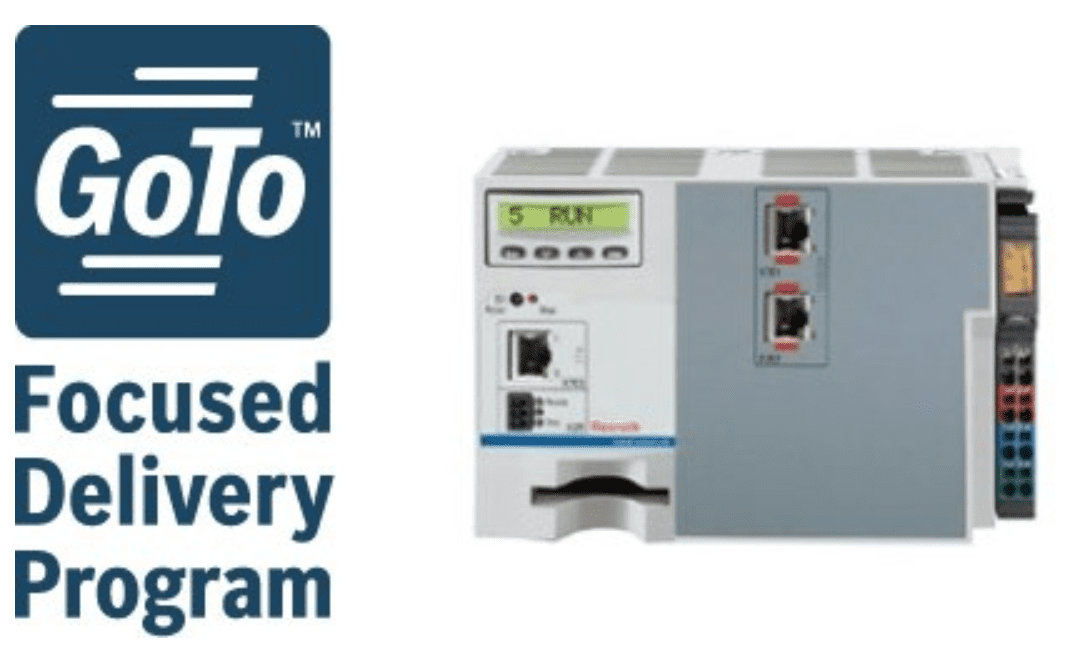
motion control pac

Image retrieved from https://www.boschrexroth.com/en/us/products/product-groups/goto-products/goto-electric-drives-and-controls/motion-control-pac/index

Bosch Rexroth’s GoTo Focused Delivery Program helps expedite the shipping process of pre-assembled, ready to ship components. This web page links to a variety of Motion Control PAC’s offered by Bosch Rexroth on their GoTo selection tool. Because logic controllers are such a common component for Senior Design projects, price estimates of a handful of controllers from Bosch Rexroth are listed below. This information was updated on April 15, 2021 and is subject to have changed. The GoTo Focused Delivery Program page here has more information about the individual configurations of various controllers. Please see the pricing notice at the bottom of the page for more info. Part Number – Description – Listed Price:

  • R911370639 – XM2100.01-01-31-31-301-NN-100NNNN – $1,967.99
  • R911391313 – XM2100.01-01-31-31-301-NN-111NNNN – $2,754.07
  • R911380465 – XM2200.01-01-31-31-001-NN-100NNNN – $4,804.30
  • R911173004 – CML75.1-3P-900-NA-NNNN-NW – $9,577.40

Pricing

If this is a product that can be useful for your Senior Design Project, please contact a Bosch Rexroth representative here for more information. Pricing can be determined on a case-by-case basis.