Ph.D. students earn national recognition for transportation research
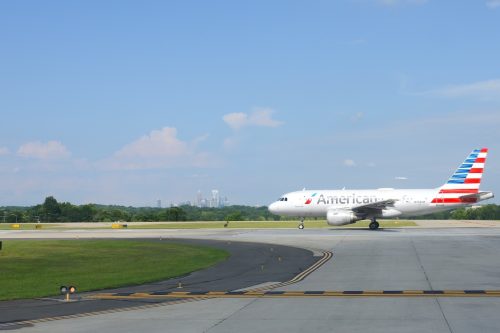
Elnaz Banani Ardecani and Ninh Nguyen, two doctoral students at UNC Charlotte, were selected as recipients for the Transportation Research Board’s 2026 Airport Cooperative Research Program Graduate Research Award.
The awards recognize graduate students conducting applied research that addresses real challenges facing airports and the aviation industry. Each recipient receives a $12,000 stipend, the opportunity to present their research at the 2028 TRB Annual Meeting and guidance from a panel of experts throughout their research study.
The student research focuses on how developing technologies can help airports make better and smarter decisions about operations within infrastructure.
Improving airport safety through safe & reliable airport management

Ardecani’s research focuses on transportation safety. Her ACRP project specifically looks into airport pavements, the runways and taxiways that are essential to safe and reliable airport operations.
Airports collect pavement information through visual inspections, nondestructive testing, maintenance records, condition assessments and increasingly, sensors. However, this information can come from different sources, at different times and in different formats.
The research aims to develop a building information model based digital framework that brings these different datasets together into one integrated environment. By connecting and visualizing pavement information, the framework could help engineers and airport managers more efficiently identify pavement needs and make informed decisions about maintenance and rehabilitation.
Her interest in the project comes from her background in civil and transportation engineering. She also enjoys learning how technology and data can improve the way transportation infrastructure is understood and managed.
“For travelers, pavement management may not be something they see directly,” said Ardecani. “But it is an important part of maintaining safe and reliable airport operations.”
Ardecani hopes to create a flexible framework. “I hope the framework developed through this research can provide a foundation that can be adapted to different airports, pavement types and levels of available instrumentation, rather than being limited to a single airport or one specific dataset,” said Ardecani.
Using robotics to understand & enhance airport traffic
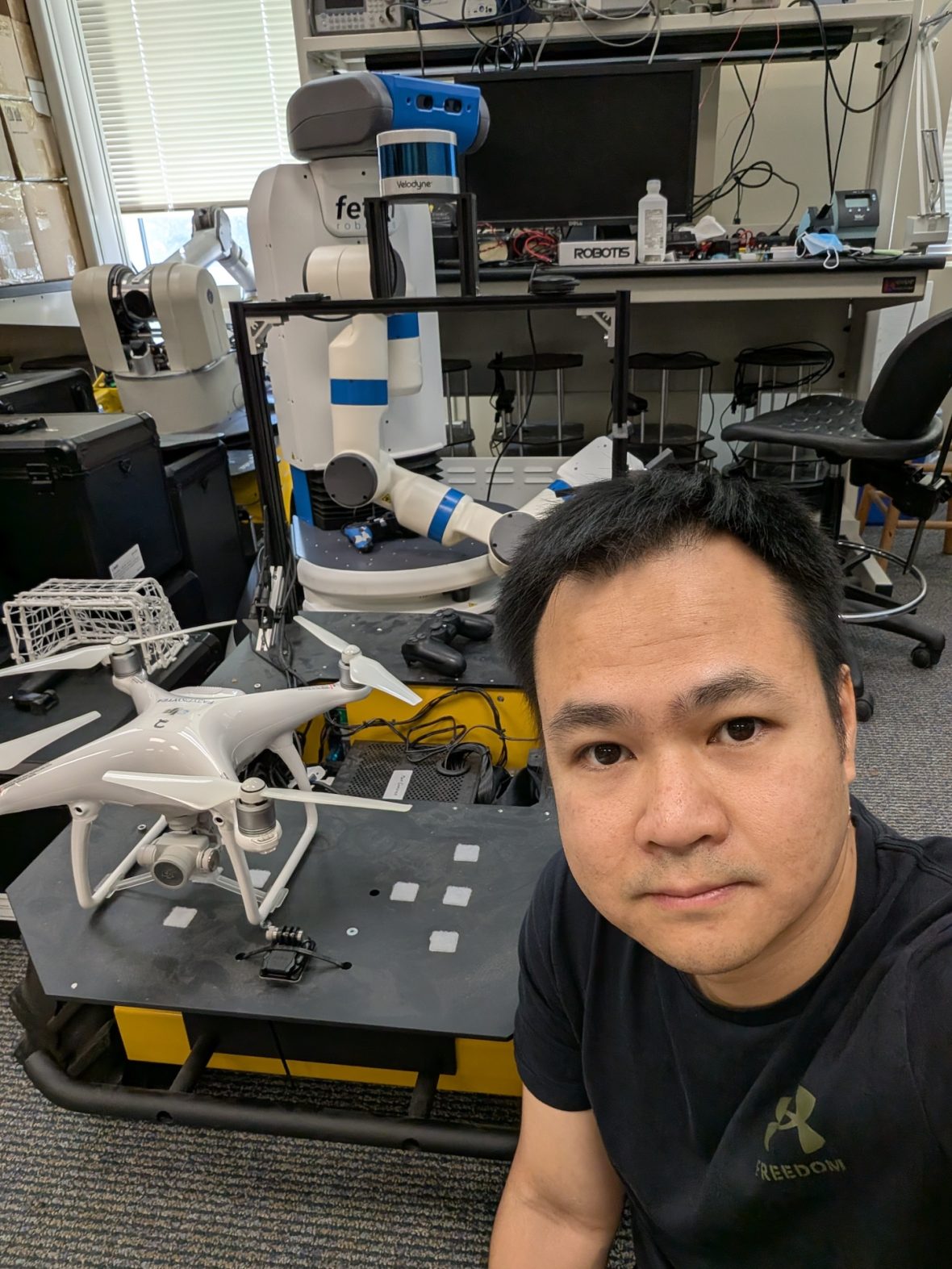
Ninh’s research brings together robotics and perception technologies into the airport environment.
His ACRP project uses light detection and ranging sensing, or LiDAR, to understand how vehicles move, stop and interact in airport pickup and drop-off areas. Unlike traditional cameras, LiDAR measures 3D shapes and distances rather than recording identifiable images, allowing the research to gather useful traffic information while maintaining privacy.
For Nguyen, one of the most exciting aspects of the project is the opportunity to connect research with a real-world problem. “My main research focuses on robotics, including multi-robot path planning in uncertain environments, optimization and physical AI,” said Nguyen. “I am excited about using robotics and perception technologies in a practical transportation setting.”
The data collected through this work could help airport managers better understand how curbside areas are being used and make decisions about curbside design, expansion, traffic organization and vehicle behavior.
Nguyen also sees possibilities beyond airports. In the future, similar vehicle-analysis approaches could potentially be applied to other crowded transportation environments, such as bus stations, or adapted to track other types of objects.
Ardecani and Nguyen research show how technology, data and engineering studies can be applied to challenges that directly affect the way transportation systems operate. Through their research, these Niner Engineers are helping create safer and more reliable transportation experiences for travelers.
Written by: Kanousa Thapa ‘27 BA Communications
Photos: courtesy of featured students