Civil and Environmental Engineering
Are you interested in designing for the sustainability and resilience of urban and natural environments?
Civil engineers are charged with planning and managing infrastructure projects while safeguarding natural environments and public welfare. The Department of Civil and Environmental Engineering prepares you to enter this field with a research-intensive program in an urban environment. With the Carolinas’ largest metro area as your classroom, you will explore technical areas such as structural, transportation, geotechnical, water resources and environmental engineering, all under the guidance of professors with extensive industry experience.
Explore programs designed to prepare you for impact.
Launch your future in Civil and Environmental Engineering with programs built for real‑world impact. Our undergraduate programs develop strong foundational skills in engineering design, infrastructure systems and environmental stewardship, preparing students to address complex challenges with confidence. Our graduate programs build on that foundation with advanced technical expertise and research opportunities, equipping professionals to innovate sustainable solutions, lead in their fields and make meaningful contributions to communities and the environment.
Industry Advisory Board
Our Industry Advisory Board is a select group of external leaders and experts who help guide our long-term strategy, academic programs and experiential learning opportunities.

Nick Amico, P.E.
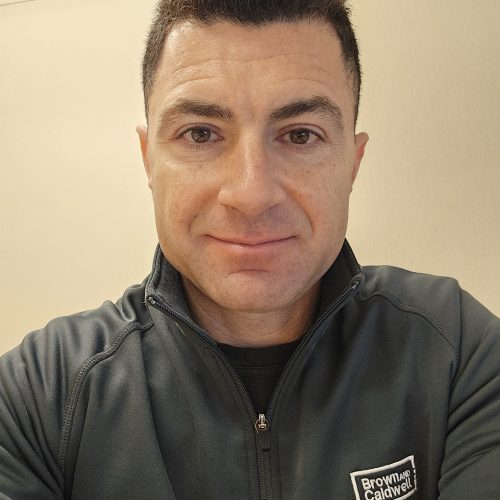
George Anipsitakis

Jessica Bednarcik, P.E., PMP
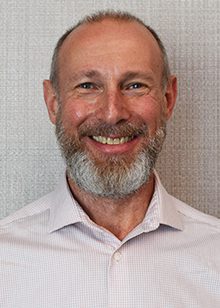
Steve Blakley
Research Areas
Explore cutting-edge research in civil and environmental engineering, from sustainable infrastructure and climate‑resilient design to innovative applications in AI, transportation, water resources and structural systems. See how our work is shaping the future of communities and the environment.
Environmental and Water Resources Engineering
Geoenvironmental Engineering
Geotechnical Engineering
Structural Engineering
Transportation Engineering
Latest News from Civil and Environmental Engineering
Explore recent achievements and research from our faculty, students and alumni as they advance infrastructure resilience, environmental sustainability and the future of our built environment.


Senior Design Program
Capstone your engineering journey with real-world problem solving. In the Senior Design Program, student teams collaborate with industry partners to tackle complex, open-ended challenges, applying classroom knowledge to develop impactful solutions. This hands-on experience builds professional skills, strengthens your portfolio and prepares you to lead in engineering, business and technology.
Accreditation
The Bachelor of Science in Civil Engineering (B.S.C.E.) degree program within the Civil and Environmental Engineering Department at The University of North Carolina at Charlotte is accredited by the Engineering Accreditation Commission of ABET, www.abet.org, under the commission’s General Criteria and Program Criteria for Civil Engineering.
ABET Program Educational Objects (PEO)
The Bachelor of Science in Civil Engineering (BSCE) Program Educational Objectives (PEO) listed below describe the program’s objectives for BSCE graduates three to five years after they have completed the program.
- BSCE Program graduates will be progressing successfully in their career and exhibiting leadership qualities.
- BSCE Program graduates will be demonstrating integrity and ethical behavior in all professional activities. Graduates will further demonstrate professionalism by nearing/obtaining professional licensure as appropriate for their chosen career, and by actively participating in professional activities.
- BSCE Program graduates will be demonstrating their technical ability to solve problems and/or manage engineering solutions from conception through implementation.
- BSCE Program graduates will be maintaining and expanding professional competencies and mastering emerging technologies by engaging in lifelong learning that includes graduate studies and professional education.
- BSCE Program graduates will strive to incorporate global, societal, economic, and environmental impacts in their professional work, consistent with the principles of sustainable development.
- BSCE graduates will be committed to continued engagement and support of the Civil and Environmental Engineering Department and seek opportunities to mentor future engineers.
- BSCE Program graduates will be engaging and collaborating with the communities in which they live and work.
ABET Student Outcomes
By graduation, students earning a BSCE degree in the Civil Engineering Program at UNC Charlotte will have:
- an ability to identify, formulate, and solve complex engineering problems by applying principles of engineering, science and mathematics;
- an ability to apply engineering design to produce solutions that meet specified needs with consideration of public health, safety and welfare, as well as global, cultural, social, environmental, and economic factors;
- an ability to communicate effectively with a range of audiences;
- an ability to recognize ethical and professional responsibilities in engineering situations and make informed judgments, which must consider the impact of engineering solutions in global, economic, environmental and societal contexts;
- an ability to function effectively on a team whose members together provide leadership, create a collaborative and inclusive environment, establish goals, plan tasks and meet objectives;
- an ability to develop and conduct appropriate experimentation, analyze and interpret data and use engineering judgment to draw conclusions; and
- an ability to acquire and apply new knowledge as needed, using appropriate learning strategies.